
MAXX Potential

Want to Future-Proof Your Business? Diversify Your Tech Talent Strategy

By MAXX Potential

Two men sit in front of laptops, working together to figure out a transformative tech talent strategy

No time like the present to consider steps to building a diverse and sustainable tech talent pipeline in light of the pace of advancement in artificial intelligence (AI) and automation. We need flexibility, innovation, and versatility in our talent strategies. 

Disruption punctuates tech conversations, and we believe the answer is anchored in upskilling and apprenticeship.

The shifting tech landscape offers so much potential for positive changes, and in this post, we’ll explore options for responding to how the tech industry is transforming and how MAXX Potential is supporting organizations in embracing the opportunities ahead.

The AI Conundrum: Job Replacement vs. Job Creation

While AI and automation advancements raise job displacement concerns, these technologies also generate new roles with distinct skill sets. 

“Tech didn’t replace its human counterparts – it actually led to more people in work, not less.” HCAmag.com pointed out in a recent article, “The ‘common sense conundrum’ for workplace AI: Which roles will fall to robotics?” They shared an example of Amazon’s largest warehouse in Delaware, US, where robots outnumbered humans, but they still employed more people at this warehouse than their other warehouses. 

According to HCAmag.com, “AI will always stumble over something, leaving humans to pitch in. And humans will always get stuck on data configuration, which is where AI excels.”

Tech leaders face questions from all sides about whether or not to replace humans with robots and new technologies. In some cases, it might make sense, and in others, it might not.

The fact is that AI will transform jobs and their corresponding tasks. That’s why it’s vital to ground your career development in timeless talents for a shifting tech landscape

Building Your Tech Talent Pipeline: Upskilling

Upskilling is the development of the people you already have on your team, and research shows that upskilling improves morale and productivity.

The World Economic Forum forecasts that “half of all employees will require reskilling by 2025.”

Forward-looking companies are moving to prioritize upskilling and reskilling of their workforce. The businesses that will ride the wave of tech advances are the ones that focus on lifelong learning.

Meanwhile, employees are also seeking to work for companies that invest in employee careers through development and upskilling, and according to the US Chamber, 94% of employees said they would stay at a company longer when professional development opportunities are available.

Ready to rise to meet the AI and automation changes? Train, reskill, and upskill your tech workforce.

In 2021-2022, alongside one of our customers, we demonstrated the transformative power of upskilling by offering its first-line representatives an opportunity to transition into IT roles. Out of 1,800 employees, 70 showed interest, and 25 were selected for a comprehensive Career Lab workshop. This resulted in 12 interviews and eight potential transitions into IT roles. 

The process revealed a wealth of untapped talent, highlighting the value of upskilling as part of a strategic talent development plan. The workshop saw high engagement and retention. Our client’s active involvement was pivotal, indicating that management’s commitment to employee career growth is a key success factor in upskilling initiatives. 

Our custom upskilling solutions range from company-wide training to team-specific workshops.

Apprenticeship: A Call for Flexibility and Agility

Rapid change calls for turning to solutions such as the apprenticeship model with its hallmarks of on-the-job training and hands-on continuous learning. 

Many large businesses are tapping into this approach by developing internal apprenticeship programs; however, this isn’t always feasible for small and medium-sized businesses with less capacity to manage their own. 

Apprenticeship USA reports that employment retention for apprentices remains high with 93% of apprentices retaining employment after their apprenticeship. This is good news for companies who desire to develop and retain their tech team.

Partnership with MAXX Potential means an integration of an apprenticeship system into your business ecosystem without bearing the full costs of starting and maintaining the program. Your business benefits from a tech talent pipeline that is tuned to the company, your technology stack, and processes. 

Hiring is easy and turnover is mitigated by a bench of hungry lifelong learners ready to add value. MAXX Apprentices come from a variety of backgrounds, and they learn on the job with the assistance of their mentor.

Apprenticeship requires a high level of adaptability as apprentices jump to learn in-demand skills. At MAXX, apprentices work in Robotic Process Automation, Cybersecurity, Enterprise Application Maintenance, and so much more. 

When something new releases, MAXX Apprentices explore the technology, discover its best use cases, and expand their knowledge base. This is a company-wide value, and our MAXX leadership team and core staff are constantly doing the same, as seen in this interview about the first 48 hours of Open AI’s API.

If your business is ready to invest in a flexible and agile apprenticeship program, partner with MAXX. We’ll help you navigate these exciting times. Get in touch at maxxpotential.com/contact-us.

MORE POSTS

Building Strong Teams Through Smart, Human-Centered Matching
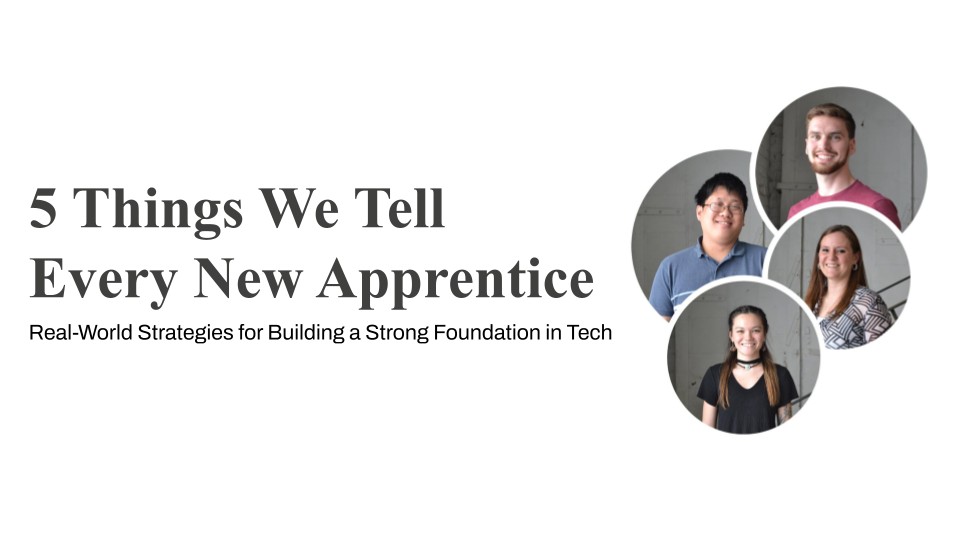
Real-World Strategies for Building A Strong Foundation in Tech

MAXX Alumni Success Story with Cassidy Fuller, Business Systems Analyst III at Chicago Transit Authority

Want to Future-Proof Your Business? Diversify Your Tech Talent Strategy

By MAXX Potential

Two men sit in front of laptops, working together to figure out a transformative tech talent strategy

No time like the present to consider steps to building a diverse and sustainable tech talent pipeline in light of the pace of advancement in artificial intelligence (AI) and automation. We need flexibility, innovation, and versatility in our talent strategies. 

Disruption punctuates tech conversations, and we believe the answer is anchored in upskilling and apprenticeship.

The shifting tech landscape offers so much potential for positive changes, and in this post, we’ll explore options for responding to how the tech industry is transforming and how MAXX Potential is supporting organizations in embracing the opportunities ahead.

The AI Conundrum: Job Replacement vs. Job Creation

While AI and automation advancements raise job displacement concerns, these technologies also generate new roles with distinct skill sets. 

“Tech didn’t replace its human counterparts – it actually led to more people in work, not less.” HCAmag.com pointed out in a recent article, “The ‘common sense conundrum’ for workplace AI: Which roles will fall to robotics?” They shared an example of Amazon’s largest warehouse in Delaware, US, where robots outnumbered humans, but they still employed more people at this warehouse than their other warehouses. 

According to HCAmag.com, “AI will always stumble over something, leaving humans to pitch in. And humans will always get stuck on data configuration, which is where AI excels.”

Tech leaders face questions from all sides about whether or not to replace humans with robots and new technologies. In some cases, it might make sense, and in others, it might not.

The fact is that AI will transform jobs and their corresponding tasks. That’s why it’s vital to ground your career development in timeless talents for a shifting tech landscape

Building Your Tech Talent Pipeline: Upskilling

Upskilling is the development of the people you already have on your team, and research shows that upskilling improves morale and productivity.

The World Economic Forum forecasts that “half of all employees will require reskilling by 2025.”

Forward-looking companies are moving to prioritize upskilling and reskilling of their workforce. The businesses that will ride the wave of tech advances are the ones that focus on lifelong learning.

Meanwhile, employees are also seeking to work for companies that invest in employee careers through development and upskilling, and according to the US Chamber, 94% of employees said they would stay at a company longer when professional development opportunities are available.

Ready to rise to meet the AI and automation changes? Train, reskill, and upskill your tech workforce.

In 2021-2022, alongside one of our customers, we demonstrated the transformative power of upskilling by offering its first-line representatives an opportunity to transition into IT roles. Out of 1,800 employees, 70 showed interest, and 25 were selected for a comprehensive Career Lab workshop. This resulted in 12 interviews and eight potential transitions into IT roles. 

The process revealed a wealth of untapped talent, highlighting the value of upskilling as part of a strategic talent development plan. The workshop saw high engagement and retention. Our client’s active involvement was pivotal, indicating that management’s commitment to employee career growth is a key success factor in upskilling initiatives. 

Our custom upskilling solutions range from company-wide training to team-specific workshops.

Apprenticeship: A Call for Flexibility and Agility

Rapid change calls for turning to solutions such as the apprenticeship model with its hallmarks of on-the-job training and hands-on continuous learning. 

Many large businesses are tapping into this approach by developing internal apprenticeship programs; however, this isn’t always feasible for small and medium-sized businesses with less capacity to manage their own. 

Apprenticeship USA reports that employment retention for apprentices remains high with 93% of apprentices retaining employment after their apprenticeship. This is good news for companies who desire to develop and retain their tech team.

Partnership with MAXX Potential means an integration of an apprenticeship system into your business ecosystem without bearing the full costs of starting and maintaining the program. Your business benefits from a tech talent pipeline that is tuned to the company, your technology stack, and processes. 

Hiring is easy and turnover is mitigated by a bench of hungry lifelong learners ready to add value. MAXX Apprentices come from a variety of backgrounds, and they learn on the job with the assistance of their mentor.

Apprenticeship requires a high level of adaptability as apprentices jump to learn in-demand skills. At MAXX, apprentices work in Robotic Process Automation, Cybersecurity, Enterprise Application Maintenance, and so much more. 

When something new releases, MAXX Apprentices explore the technology, discover its best use cases, and expand their knowledge base. This is a company-wide value, and our MAXX leadership team and core staff are constantly doing the same, as seen in this interview about the first 48 hours of Open AI’s API.

If your business is ready to invest in a flexible and agile apprenticeship program, partner with MAXX. We’ll help you navigate these exciting times. Get in touch at maxxpotential.com/contact-us.

MORE POSTS

Building Strong Teams Through Smart, Human-Centered Matching

Real-World Strategies for Building A Strong Foundation in Tech

MAXX Alumni Success Story with Cassidy Fuller, Business Systems Analyst III at Chicago Transit Authority

The First 48 Hours of OpenAI’s API: An Interview with Tucker Mahan

By MAXX Potential

“There’s been a lot of comparisons of this tech to some of the bigger disruptors, such as the internet, Google search, and cloud computing.” Tucker Mahan, MAXX Potential Talent Director, is talking about ChatGPT and the OpenAI API. “There’s a lot of interesting dialogue happening – ethics, opinions, security, value versus investment, and predictions.”

As ChatGPT remains the main topic of conversation at board tables and in break rooms, it’s time to be playing with the possibilities, pushing limitations, and exercising curiosity. 

And that’s exactly what Tucker’s been doing. In the first 48 hours after the release, Tucker integrated the new model endpoints into his ongoing project.

How OpenAI API Integration Can Take Your Project to the Next Level

Hour 1: Exploring the Potential of OpenAI GPT-3.5-Turbo and Whisper APIs

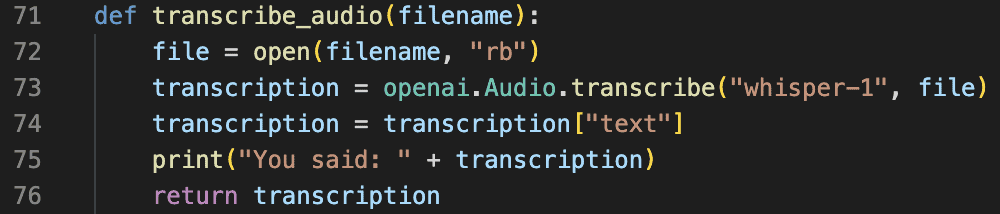
With the release of the Whisper API, Tucker envisioned being able to upgrade his custom-built assistant, Dumbledore, to use their transcriptions and translations endpoints to improve the Speech-to-Text speed, add a Spanish practice bot, and implement a wake word solution.

“The Whisper API was super great.” Tucker explained that he’d worked with the open source project before the API was released, and he had considered building something that would do the job for his Dumbledore project. In the end, he’d opted to use an alternative Speech-to-Text solution up until the Whisper API released. “Being able to access their API to do Whisper translations in real time was super exciting.”

He shared his process for a good working session when he wants to be in the zone. “I just sit down. I put my headphones on. I forget to turn the music on, and I start chugging away.” 

He focused on Dumbledore for hours, coding several new features to make the assistant do what he wanted. It wasn’t until his wife showed up at his desk with a plate of Margherita pizza around 8:30 pm that he realized he’d forgotten to eat.

Hours 2-5: How ChatGPT Speeds Up Project Development

Throughout the entire project, Tucker kept ChatGPT open on part of his screen to write basic code, trouble shoot, and provide insight as needed. The tool proved its worth. Tucker reported, “ChatGPT helped me debug, frame, and structure a lot of the improved Dumbledore project.”

For Tucker, the idea is to use ChatGPT to speed up his process.

“So when I’m writing a lot of boilerplate, simple logic stuff, Python, JavaScript, HTML, CSS, I’m using it for that. It does get things wrong.” Tucker explains. “I adjust variables and make adjustments where I need to.”

But there’s a key to getting stronger and better code from ChatGPT. Tucker shared, “If I do a good job of feeding it parts of my code up front, or which libraries I’m using, it starts using the variable names and libraries I’ve already selected so that its output is a lot more custom to what you’re doing.”

Hour 6: Testing the Limits of AI Conversation

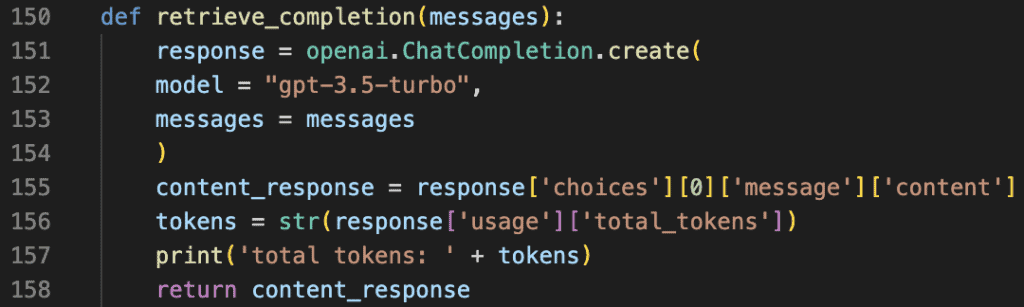
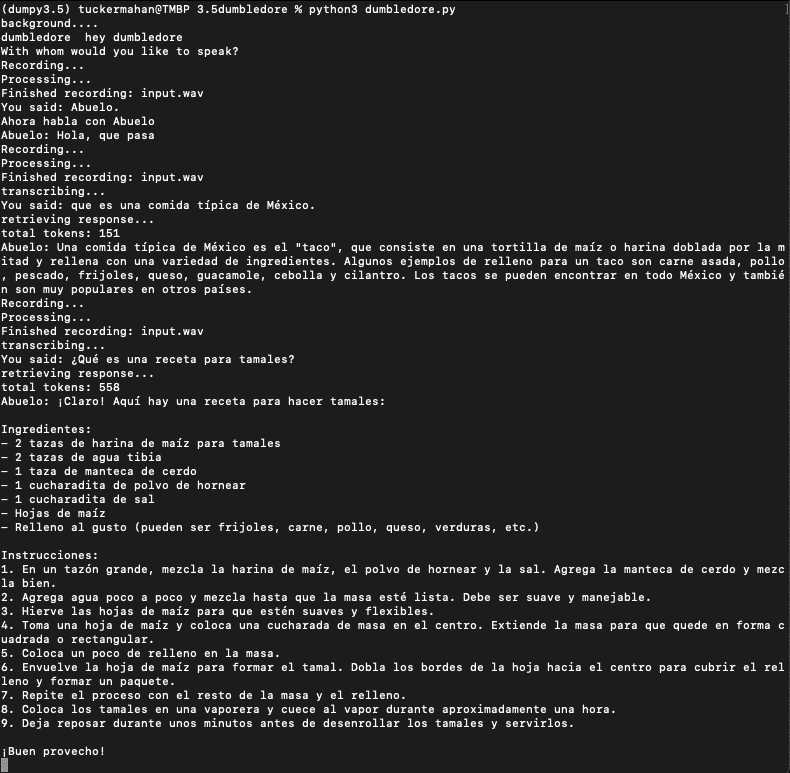
With ChatGPT by his side, Tucker created Dumbledore 3.5. His new iteration incorporated the Whisper API and GPT-3.5-Turbo models to enhance more in-depth conversation. Around midnight, Tucker tested Dumbledore 3.5.

“Hey, Dumbledore.” Tucker spoke the wake words.
“With whom would you like to speak?” His computer asked.
“Abuelo,” Tucker replied.
“Hola, ¿qué pasa?” was the immediate response from the AI assistant.

Tucker programmed Dumbledore 3.5 to have three different versions of his assistant. For basic functionality, Tucker can reply, “ChatGPT.” If Tucker responds with “Dumbledore,” he’ll be greeted by a voice that sounds uncannily like Dumbledore from the Harry Potter movie series, and if he responds with “Abuelo,” Dumbledore speaks in Spanish.

“I’m constantly working on my Spanish skills. My wife is fluent in Spanish and our son will be bilingual, so I want to make sure that I can keep up with them.” Tucker explains why his personal assistant is fluent in Spanish and English. “Having the ability to talk to a computer that will not judge me when I mispronounce things is front and center for me. This was possible because of the Whisper API and GPT 3.5.”

GPT-4 Is Here – What Are Your Thoughts?

“This is technology worth learning,” Tucker shared. “I believe that it has so many potential applications and will continue evolving rapidly, likely getting integrated into so many of the tools we already use. I tuned into the GPT-4 developer preview with 100k+ others, and the improvements with that model are great to see. My favorite moment was seeing GPT-4 summarize a blog post using only the letter Q and GPT-4 as a proper noun, ‘GPT-4 quintessentially quickens quality quantifications, quelling questionable quandaries.’”

ChatGPT is already being used by many, and Tucker suggests finding out if people on your teams are using the tool. “Odds are there’s at least a couple on your teams who are.”

“Education and training with this tech is a good next step. I think a lot of creative efforts are necessary to discover how to best utilize this tech, because there are so many time and cost savings involved if you do this well. It has certainly increased my productivity.”

At MAXX Potential, we encourage curiosity, initiative, and exploration. If you’re interested in talking with MAXX about how AI can help your company reach its goals, contact us!

MORE POSTS

Building Strong Teams Through Smart, Human-Centered Matching

Real-World Strategies for Building A Strong Foundation in Tech
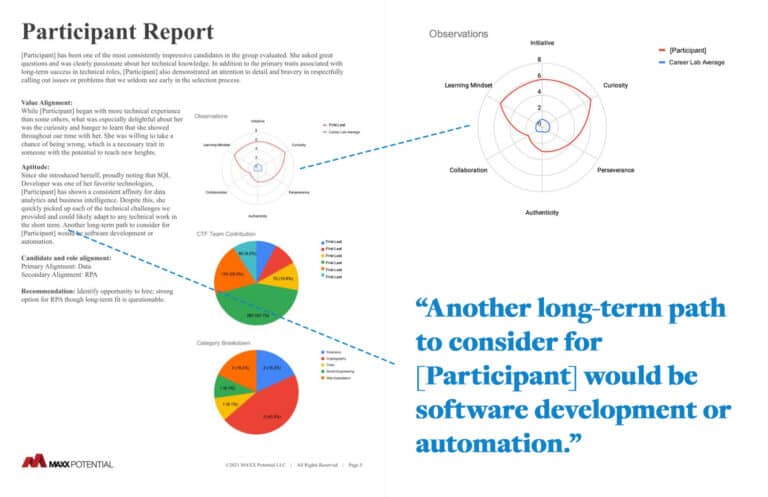
MAXX Alumni Success Story with Cassidy Fuller, Business Systems Analyst III at Chicago Transit Authority

The First 48 Hours of OpenAI’s API: An Interview with Tucker Mahan

By MAXX Potential

“There’s been a lot of comparisons of this tech to some of the bigger disruptors, such as the internet, Google search, and cloud computing.” Tucker Mahan, MAXX Potential Talent Director, is talking about ChatGPT and the OpenAI API. “There’s a lot of interesting dialogue happening – ethics, opinions, security, value versus investment, and predictions.”

As ChatGPT remains the main topic of conversation at board tables and in break rooms, it’s time to be playing with the possibilities, pushing limitations, and exercising curiosity. 

And that’s exactly what Tucker’s been doing. In the first 48 hours after the release, Tucker integrated the new model endpoints into his ongoing project.

How OpenAI API Integration Can Take Your Project to the Next Level

Hour 1: Exploring the Potential of OpenAI GPT-3.5-Turbo and Whisper APIs

With the release of the Whisper API, Tucker envisioned being able to upgrade his custom-built assistant, Dumbledore, to use their transcriptions and translations endpoints to improve the Speech-to-Text speed, add a Spanish practice bot, and implement a wake word solution.

“The Whisper API was super great.” Tucker explained that he’d worked with the open source project before the API was released, and he had considered building something that would do the job for his Dumbledore project. In the end, he’d opted to use an alternative Speech-to-Text solution up until the Whisper API released. “Being able to access their API to do Whisper translations in real time was super exciting.”

He shared his process for a good working session when he wants to be in the zone. “I just sit down. I put my headphones on. I forget to turn the music on, and I start chugging away.” 

He focused on Dumbledore for hours, coding several new features to make the assistant do what he wanted. It wasn’t until his wife showed up at his desk with a plate of Margherita pizza around 8:30 pm that he realized he’d forgotten to eat.

Hours 2-5: How ChatGPT Speeds Up Project Development

Throughout the entire project, Tucker kept ChatGPT open on part of his screen to write basic code, trouble shoot, and provide insight as needed. The tool proved its worth. Tucker reported, “ChatGPT helped me debug, frame, and structure a lot of the improved Dumbledore project.”

For Tucker, the idea is to use ChatGPT to speed up his process.

“So when I’m writing a lot of boilerplate, simple logic stuff, Python, JavaScript, HTML, CSS, I’m using it for that. It does get things wrong.” Tucker explains. “I adjust variables and make adjustments where I need to.”

But there’s a key to getting stronger and better code from ChatGPT. Tucker shared, “If I do a good job of feeding it parts of my code up front, or which libraries I’m using, it starts using the variable names and libraries I’ve already selected so that its output is a lot more custom to what you’re doing.”

Hour 6: Testing the Limits of AI Conversation

With ChatGPT by his side, Tucker created Dumbledore 3.5. His new iteration incorporated the Whisper API and GPT-3.5-Turbo models to enhance more in-depth conversation. Around midnight, Tucker tested Dumbledore 3.5.

“Hey, Dumbledore.” Tucker spoke the wake words.
“With whom would you like to speak?” His computer asked.
“Abuelo,” Tucker replied.
“Hola, ¿qué pasa?” was the immediate response from the AI assistant.

Tucker programmed Dumbledore 3.5 to have three different versions of his assistant. For basic functionality, Tucker can reply, “ChatGPT.” If Tucker responds with “Dumbledore,” he’ll be greeted by a voice that sounds uncannily like Dumbledore from the Harry Potter movie series, and if he responds with “Abuelo,” Dumbledore speaks in Spanish.

“I’m constantly working on my Spanish skills. My wife is fluent in Spanish and our son will be bilingual, so I want to make sure that I can keep up with them.” Tucker explains why his personal assistant is fluent in Spanish and English. “Having the ability to talk to a computer that will not judge me when I mispronounce things is front and center for me. This was possible because of the Whisper API and GPT 3.5.”

GPT-4 Is Here – What Are Your Thoughts?

“This is technology worth learning,” Tucker shared. “I believe that it has so many potential applications and will continue evolving rapidly, likely getting integrated into so many of the tools we already use. I tuned into the GPT-4 developer preview with 100k+ others, and the improvements with that model are great to see. My favorite moment was seeing GPT-4 summarize a blog post using only the letter Q and GPT-4 as a proper noun, ‘GPT-4 quintessentially quickens quality quantifications, quelling questionable quandaries.’”

ChatGPT is already being used by many, and Tucker suggests finding out if people on your teams are using the tool. “Odds are there’s at least a couple on your teams who are.”

“Education and training with this tech is a good next step. I think a lot of creative efforts are necessary to discover how to best utilize this tech, because there are so many time and cost savings involved if you do this well. It has certainly increased my productivity.”

At MAXX Potential, we encourage curiosity, initiative, and exploration. If you’re interested in talking with MAXX about how AI can help your company reach its goals, contact us!

MORE POSTS

Building Strong Teams Through Smart, Human-Centered Matching

Real-World Strategies for Building A Strong Foundation in Tech

MAXX Alumni Success Story with Cassidy Fuller, Business Systems Analyst III at Chicago Transit Authority

Building vs. Buying Talent: Which is right for you?

By The Team at MAXX

Many IT executives are routinely faced with decisions on whether to build vs. buy when it comes to critical business applications (There’s a great post on that topic here), but how can you apply this framework to your talent strategy? Should you build or buy the necessary talent to grow your team? Our take: as with enterprise software, a winning approach involves applying a strategic framework and the capacity to do both.

Is there anything more strategic than your culture and talent strategy?

It makes sense to buy talent, and by that, we mean paying market premiums for experienced professionals, when the role requires advanced skills such as prior leadership experience, industry knowledge, and a deep technical track record. When a candidate has amassed a resume of skills and experience, your investment decision is based on how they can integrate into your organization, and the immediate value they can add in terms of increased revenue or implementing cost-savings strategies.

For entry-level positions, however, turnover should be higher if you are finding capable and driven employees, and the selection process is less straightforward. You are looking for motivated individuals with the ability to become that senior professional one day. Integrating a build approach into your talent strategy is a long-term investment that will set your organization up for success and pay off well into the future.

The Unique Challenges of Entry-level Roles

Buying talent for entry-level roles can seem like a faster option initially, but it becomes more costly when you have to do it over and over again (as you should). On the surface these roles may seem less strategic, and can also consume a disproportionate amount of training time and recruiting expense to keep them staffed. Downtime for even the most junior roles is costly and presents an operational risk.

  1. Hiring
    Entry-level candidates are lacking the years of experience that are sought after for more senior roles. This makes a traditional resumé the least valuable tool in making a selection. At this stage you are looking for two things: value-alignment and aptitude. These are hard to measure, and the cost of a mistake at this stage is high.
  2. Developing
    Mentoring entry-level talent takes time and attention away from experienced employees who are already at capacity. Many organizations also lack the capacity and budget to build a custom training program that includes dedicated full-time staff who are skilled, not only in their technical craft, but in the art of mentoring.
  3. Retaining
    High-potential employees are seekers of continuous growth and learning opportunities. Building a structured process for upskilling requires far more than purchasing a library of self-study training material (Don’t we have the Internet for that?). Most savvy leaders know that investing in their team creates a culture of continuous learning and growth that people will stick around for.

MAXX Potential was built by industry leaders who experienced these challenges first-hand and created a solution. Organizations have a need to invest in entry-level recruiting in order to grow their teams without taking away from other strategic imperatives. MAXX has cultivated a strong pipeline along with a supporting infrastructure specific to entry-level enterprise technology roles. We seek out people who have the potential and desire to break into the technology industry, and work with them to develop the skills needed to thrive in your organization. Our goal is to fill entry-level technology roles with people who are worth investing in and have the capability to contribute to your organization in a way that is meaningful starting day one.

Let Us Take these Entry-level Challenges Off Your Plate

While we aren’t a fit for ALL of your talent needs, what we do at MAXX Potential, we do really well. As a partner, we offer effective solutions for filling entry-level technology roles with the least amount of risk and disruption.

With guaranteed backfill of vacated roles, customized on-the-job training, ongoing mentor support and zero conversion fees to hire at any time, MAXX Potential would be an impactful addition to your overall talent strategy. Contact us today.

OUR THOUGHTS

Building Strong Teams Through Smart, Human-Centered Matching

Real-World Strategies for Building A Strong Foundation in Tech

MAXX Alumni Success Story with Cassidy Fuller, Business Systems Analyst III at Chicago Transit Authority